

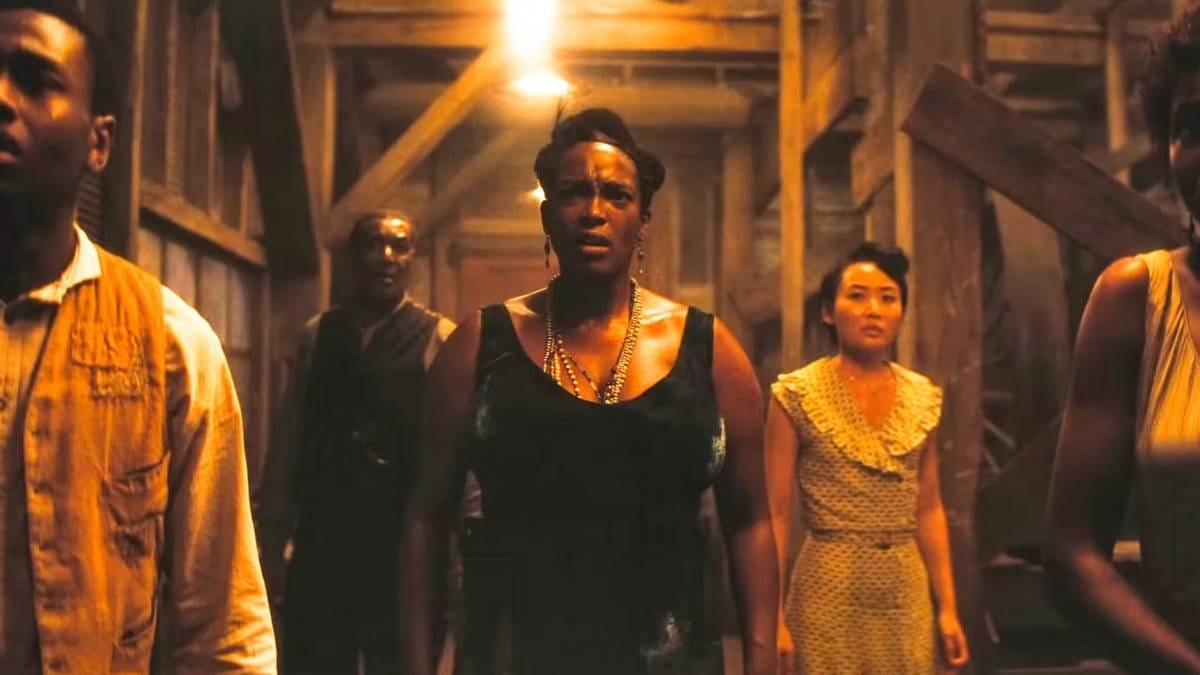
Last month when I was visiting Stanford an alert reader pointed out a technique in my story Ysrael that is common enough in cinema but not discussed enough in fiction — the Reaction Shot. In film a Reaction Shot — cutting away from the action to show a character reacting to the action — creates an emotional model for audiences to agree or disagree with.
In fiction a Reaction Shot — showing a character’s reaction to some provocation in the diegesis — is my favorite descriptive shortcut, what in my homebrew I call a triplazo, triply beneficial because —
1. Like in film, literary Reaction Shots MODEL your reader’s emotional responses.
Readers doesn’t always know when to react or how and Reaction Shots help guide their responses. The reality is readers understand and connect more viscerally to another person’s reaction than the most lyrically written descriptions ever penned. We’re just limbic like that.
2. Reaction Shots FORTIFY your descriptions.
Film can capture immense detail effortlessly, but we writers need every shortcut we can muster if we are to sell the Illusion of Life through our words. Let’s say you want to convince your readers that X is disgusting. Sure, you can elaborate on how disgusting X is via descriptions but if you really want to sell X efficiently, show us a Character’s convincing reaction to the disgusting-ness that you’re describing.
3. Reaction Shots ILLUMINATE your Characters.
How a character reacts to stimuli, especially if said reaction is chosen astutely, will bring that Character to life in ways that very few things can match, especially if said Character is not responding how the “average person” might respond. Even better for your characterizations: if there are other reactors to provide a comparison. Collective Reaction Shots can differentiate Characters with an enviable quickness.
As far as structuring, Reaction Shots can precede the description; they can succeed the description; they can occur concurrently or they can replace the description. Each will have their own benefits and drawbacks depending on what you are describing.
Obviously, not everything needs a Reaction Shot but when curated wisely, they will create circuits for immersion, all the while performing necessary narrative labors.
This is indeed a great technique for fiction writers. George Saunders, in his book, "A Swim in a Pond in the Rain," describes this technique in the story written by Turgenev, 'The Singers.' Turgenev used the reaction shot you mention to show the reader how the audience reacts to the singers, and doesn't even describe the singing itself. It was a brilliant way to show the music's impact without trying to describe the sound itself.
Always works more effectively when the reader sees how others react.
Great post. It describes the writer’s way of giving the readers emotional guideposts without hitting them on the head with “You shall feel this.” Once again you have given me concrete info about what good writers do. Thank you, Junot.